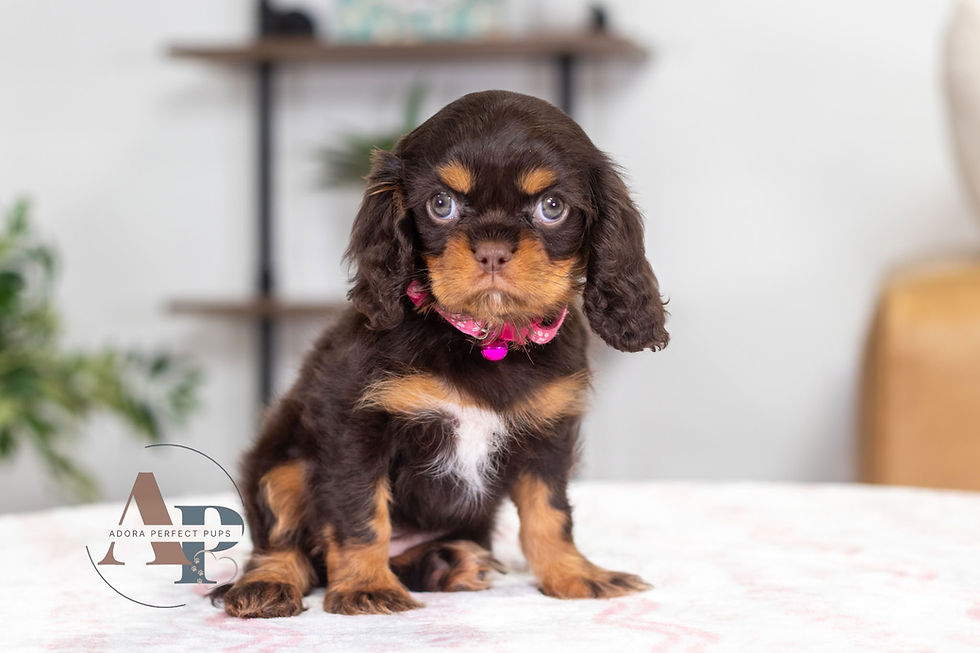
Are Cavaliers Lap Dogs or Active Companions?


Cavalier King Charles Spaniels are often pictured curled up on a lap, eyes half-closed, perfectly content to relax for hours. At the same time, many owners also see Cavaliers eagerly grab a leash, bounce toward toys, or follow along on daily walks. This leads to a common and important question: Are Cavaliers lap dogs, or are they active companions?
At Adora Perfect Pups, this question comes up frequently, and the answer is one of the reasons Cavaliers are so widely loved. Cavaliers are not strictly one or the other. Instead, they balance both roles in a way few breeds can. This article breaks down how Cavaliers express both sides of their personality and what owners should expect in everyday life.
Understanding the Lap Dog Label
The term “lap dog” is often used to describe dogs that prefer rest, closeness, and minimal activity. Cavaliers certainly fit this description in some ways.
Cavaliers love:
Sitting on laps
Cuddling on couches
Resting beside their people
Staying physically close
Their desire for closeness is deeply rooted in their history as companion dogs. Being near their people feels natural and comforting.
However, labeling Cavaliers as only lap dogs oversimplifies their personality.
Cavaliers as Active Companions
While Cavaliers enjoy relaxing, they are far from inactive. Cavaliers have a playful, engaged side that emerges naturally when given the opportunity.
As active companions, Cavaliers enjoy:
Daily walks
Short play sessions
Exploring new environments
Interactive games with family members
They may not have the endurance of working breeds, but they absolutely enjoy movement and participation in daily life.
Why Cavaliers Balance Both Roles So Well
The Cavalier King Charles Spaniel was bred specifically to adapt to human life. Their role was never limited to lying still all day, nor was it centered on intense physical labor.
This balance exists because:
They were bred for companionship, not work
Their energy level is moderate
Their temperament is emotionally adaptable
Cavaliers instinctively match the pace of their household. When it is time to relax, they relax. When it is time to move, they are ready.
What a Typical Day Looks Like
A typical day with a Cavalier illustrates this balance perfectly.
Many Cavaliers:
Start the day with a walk or playtime
Settle calmly during work or downtime
Engage again in the afternoon
End the day curled up beside their people
They transition smoothly between activity and rest without becoming restless or overstimulated.
Lap Dog Behavior Explained
When Cavaliers act like lap dogs, it is usually because:
They feel secure
They are emotionally content
They are enjoying shared quiet time
Lap behavior is a sign of trust and bonding, not laziness. Cavaliers seek closeness as a way to connect, regulate emotions, and feel included.
This is why Cavaliers often choose laps over dog beds, even when both are available.
Playfulness and Engagement
Cavaliers often surprise people with their playful side. While their play sessions may be shorter than those of high-energy breeds, they are enthusiastic participants.
Playful behaviors include:
Fetching toys
Gentle chasing games
Interactive tug play
Short bursts of zooming
They enjoy play most when it is shared with their people rather than independent.
Walking and Outdoor Activity
Cavaliers enjoy walks and outdoor exploration. Their energy level allows them to keep up comfortably without overexertion.
On walks, Cavaliers often:
Walk eagerly but calmly
Enjoy sniffing and exploring
Stay attentive to their owner
They are not typically pullers or frantic movers, which makes walking enjoyable rather than stressful.
How Age Affects Activity Levels
A Cavalier’s balance between lap dog and active companion changes slightly with age.
Puppies
Puppies lean more toward the active side, with frequent play bursts followed by naps.
Adults
Adult Cavaliers show the most balanced mix of activity and relaxation.
Seniors
Senior Cavaliers lean more toward lap dog behavior while still enjoying gentle activity.
At every stage, the desire for closeness remains constant.
Cavaliers in Active Households
In active homes, Cavaliers rise to the occasion. They may not run marathons, but they enjoy being involved.
They do well with:
Families who walk daily
Homes with children
Owners who enjoy light activity
As long as the activity level is reasonable, Cavaliers adapt happily.
Cavaliers in Quiet Homes
In quieter homes, Cavaliers are equally content. They do not require constant stimulation to feel fulfilled.
They thrive in:
Homes with relaxed routines
Work-from-home environments
Low-noise households
In these settings, Cavaliers often spend more time cuddling and resting without losing their playful spirit.
Emotional Energy Matters More Than Physical Intensity
For Cavaliers, emotional engagement is often more important than physical exertion.
They are happiest when:
Included in daily life
Given attention and affection
Allowed to rest near their people
A Cavalier may choose cuddling over play if emotional needs are already fulfilled.
Common Misconceptions About Cavaliers
Some people assume Cavaliers are lazy because they enjoy resting. In reality, they simply regulate energy well.
Others believe lap dogs cannot be active. Cavaliers prove that a dog can enjoy both roles without conflict.
Understanding this balance helps prevent unrealistic expectations.
Do Cavaliers Get Bored Easily?
Cavaliers typically do not become bored if they receive:
Daily interaction
Moderate activity
Emotional inclusion
Boredom is more likely if they are isolated rather than under-exercised.
Encouraging Healthy Balance
Owners can support a healthy lap dog and active companion balance by:
Maintaining consistent routines
Offering daily walks
Encouraging play without forcing it
Allowing rest without guilt
Listening to the dog’s cues is key.
Which Role Do Cavaliers Prefer?
Most Cavaliers do not choose one role exclusively. They preferbeing with their people, regardless of activity.
If you are active, they will join you. If you are resting, they will settle beside you.
This flexibility is one of the breed’s most valuable traits.
Is This Balance Right for You?
Cavaliers are ideal for people who want:
A cuddly companion
Moderate daily activity
A dog that adapts to their pace
They may not suit owners seeking a high-endurance athlete or a completely hands-off pet.
Common Owner Experiences
Many owners report that Cavaliers:
Walk happily, then nap deeply
Play enthusiastically, then cuddle
Follow routines without resistance
This rhythm creates a calm, predictable household dynamic.
Final Thoughts on Cavaliers as Lap Dogs and Active
Companions
Cavalier King Charles Spaniels are both lap dogs and active companions, and that is exactly what makes them special. They blend affection, adaptability, and moderate energy into one balanced, emotionally intelligent companion.
At Adora Perfect Pups, we believe this balance is the heart of the breed. Cavaliers do not demand constant activity, nor do they insist on constant rest. Instead, they offer something rare: a dog that meets you where you are, every single day.